


Driven by experience
Exporter of Rubber Products worldwide


A good workplace should always be comfortable and safe for everyone. But when employees spend many hours standing on hard concrete, tiles, or other solid surfaces, they can feel tired quickly. Sore feet, leg pain, and stress on the back and joints can make it harder for your team to work comfortably and efficiently.
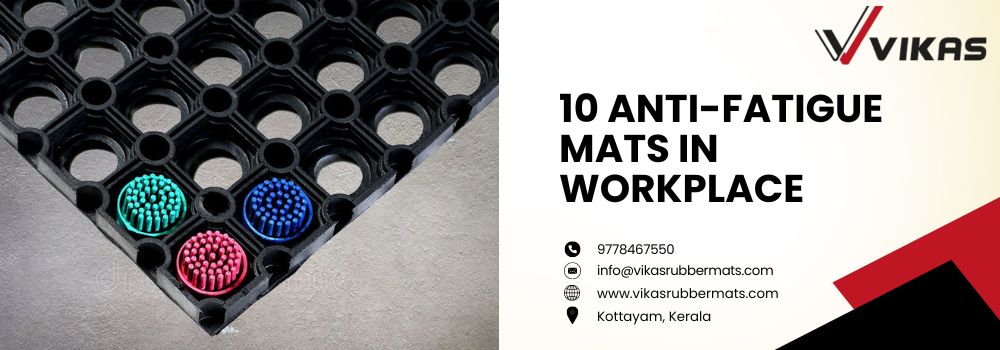
This is where anti-fatigue flooring can make a big difference. Made to provide cushioning and support under the feet, anti-fatigue mats can help reduce the strain caused by standing for long periods. They also allow small body movements that may improve blood flow and make long working hours feel more comfortable.
For business owners, choosing the right workplace flooring is about more than just comfort. It can also help employees stay focused, improve workplace safety, and increase overall job satisfaction. Whether you run a factory, workshop, warehouse, retail store, commercial kitchen, or any other workplace where employees stand for long hours, the right flooring can support your team during the entire workday.
In this blog, we will explain why anti-fatigue flooring matters for your team, discuss its main benefits, and show how the right flooring choice can help create a safer, more comfortable, and more productive workplace.
What Is Anti-Fatigue Flooring?
Anti-fatigue flooring is designed to reduce the physical strain caused by standing or walking on hard surfaces for extended periods. Unlike conventional concrete, tile, or other rigid flooring, anti-fatigue surfaces provide controlled cushioning and support underfoot.
The flooring slightly compresses when weight is applied, encouraging small movements in the feet and legs. This can help reduce pressure on the feet, ankles, knees, and lower back during long shifts. Anti-fatigue flooring is commonly used in workplaces where employees spend significant time standing, including manufacturing facilities, warehouses, workshops, retail stores, commercial kitchens, laboratories, and assembly areas. The goal is not simply to make the floor softer it is to create a more supportive working environment that helps employees remain comfortable and focused throughout the day.
Reasons - Why Anti-Fatigue Flooring Matters for Your Team
Anti-fatigue mats not only offer comfort but also offer a lot of benefits for your team. Here are the main reasons that you should choose anti-fatigue flooring:
Reduces Discomfort During Long Shifts
Standing for several hours on a hard floor can gradually cause discomfort in the feet and legs. As the workday continues, employees may experience tired feet, sore joints, stiffness, or lower-back discomfort.
Anti-fatigue flooring provides cushioning between the employee and the hard surface underneath. This additional support can make prolonged standing more comfortable, particularly in workstations where employees cannot frequently sit down or change their position. For businesses with eight- or ten-hour shifts, even a small improvement in everyday comfort can make a meaningful difference. Employees who are less distracted by foot and leg discomfort can focus more easily on their tasks instead of constantly shifting their weight or looking for opportunities to rest.
Supports Workplace Ergonomics
Ergonomics is about designing the workplace around the needs and capabilities of the people using it. While businesses often focus on adjustable workstations, appropriate tools, seating, and equipment positioning, flooring is another important part of the ergonomic environment.
A hard, unforgiving floor can increase the physical demands of standing work. Anti-fatigue flooring adds cushioning at the point where employees interact with the workplace for most of their shift on their feet. When combined with appropriate footwear, proper workstation height, good posture, and opportunities to change position, anti-fatigue flooring can become an effective part of a broader workplace ergonomics strategy.
Helps Employees Stay Focused and Productive
Employee comfort and productivity are closely connected. When physical discomfort builds throughout a shift, it can become an ongoing distraction. An employee may need to take additional informal breaks, change positions repeatedly, or simply find it harder to maintain concentration.
A more comfortable standing surface can help employees remain engaged with their work for longer periods. This is particularly valuable in repetitive or precision-based jobs where sustained attention is important. Anti-fatigue flooring should not be viewed as a solution for every productivity challenge. However, reducing one common source of physical discomfort can contribute to a workplace where employees can perform their responsibilities more comfortably and consistently.
Can Contribute to a Safer Working Environment
Workplace flooring also has an important safety role. Employees who experience tired or uncomfortable feet may naturally alter the way they stand or walk. In busy environments, this can become another factor to consider when evaluating workplace risks. Many anti-fatigue flooring products are available with textured or slip-resistant surfaces. These options can provide additional traction in areas where employees are standing for long periods, especially when the work environment involves moisture, dust, oils, or other contaminants.
However, businesses should select flooring based on the specific hazards present in their facility. Anti-fatigue properties alone do not guarantee slip resistance. The flooring should have appropriate traction, drainage, chemical resistance, and other characteristics required for the application.
Reduces the Impact of Hard Industrial Surfaces
Concrete floors are common in factories, warehouses, workshops, and other commercial environments because they are durable and capable of handling heavy loads. The problem is that concrete provides virtually no cushioning for employees who stand on it throughout the day.
Anti-fatigue flooring can provide a practical layer of cushioning without requiring businesses to replace the underlying floor. Depending on the application, it may be installed as individual mats, interlocking tiles, rolls, or other flooring systems. This makes it possible to improve employee comfort in specific high-traffic areas without undertaking a complete flooring renovation.
Improves the Employee Experience
Workplace improvements do not always need to involve major investments or visible technology. Small changes that directly improve everyday working conditions can also have an impact on how employees experience their workplace.
Providing a more comfortable standing surface shows that the business is considering the physical demands placed on its team. Employees who spend most of their working day standing can particularly benefit from improvements that address an issue they experience every day. For businesses focused on employee retention and workplace satisfaction, creating a more comfortable environment can therefore be part of a broader employee well-being strategy.
Choosing the Right Anti-Fatigue Flooring for Your Team
Not every anti-fatigue floor is suitable for every workplace. The right option depends on how and where it will be used. Start by considering the type of work performed in the area. A light-duty workstation may require different flooring from a manufacturing line exposed to heavy equipment, oils, chemicals, or metal components.
- Durability is another important factor. Flooring should be capable of handling the expected level of foot traffic and workplace activity without quickly becoming damaged or losing its cushioning properties.
- Slip resistance should also be considered, particularly in wet or contamination-prone environments. Businesses should check the manufacturer's specifications and choose a surface designed for the conditions in which it will be installed.
- Cleaning and maintenance requirements matter as well. Flooring that is difficult to clean can become a problem in food processing, healthcare, hospitality, and other environments with strict hygiene requirements.
- Finally, consider the size and layout of the work area. Mats may work well for individual workstations, while modular tiles or larger flooring systems may be more appropriate for areas where employees move between multiple standing positions.
Final Words - Anti-Fatigue Flooring Is an Investment in Your Team
The value of anti-fatigue flooring goes beyond simply making a floor feel softer. It can contribute to a workplace that is more comfortable, ergonomic, and supportive for employees who spend long periods on their feet. By reducing the physical impact of hard surfaces, improving standing comfort, supporting workplace ergonomics, and potentially contributing to safer work areas, the right flooring can address a practical problem that employees experience every day.
For businesses, the best approach is to identify areas where prolonged standing is part of the job and evaluate whether the existing flooring is contributing to discomfort or fatigue. From there, selecting an anti-fatigue flooring solution suited to the environment can be a relatively straightforward workplace improvement. Ultimately, when employees spend less energy coping with unnecessary physical discomfort, they have more opportunity to focus on the work that matters. That is why anti-fatigue flooring deserves to be considered as part of a well-designed, employee-focused workplace.
Certification


