


Driven by experience
Exporter of Rubber Products worldwide


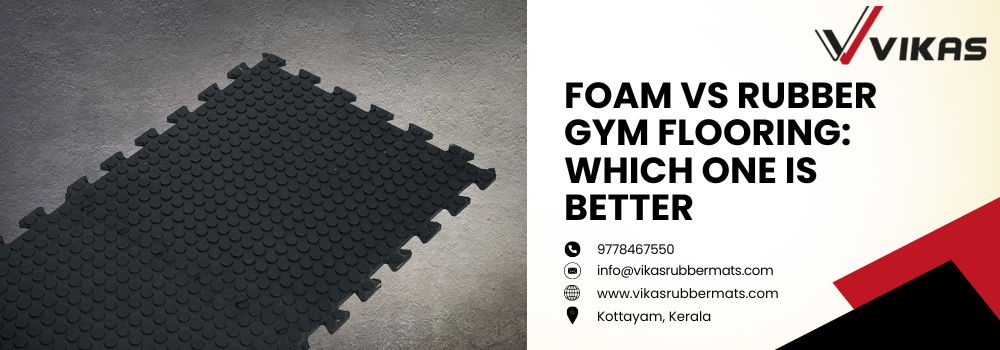
Choosing between Foam vs rubber gym flooring is one of the most important decisions when it comes to setting up a gym or home workout space. Both flooring options help to protect your floor and provide a safer workout surface, but they are designed for different types of training. Foam flooring is best for light exercises and comfort, while rubber gym flooring is stronger and better for heavy equipment and weightlifting.
In this guide, we will compare Foam gym flooring and Rubber gym flooring to help you understand the differences and choose the best flooring for your home gym, commercial gym, or fitness centre.
Understanding Foam and Rubber Gym Flooring
Choosing the right gym flooring starts with understanding what foam and rubber flooring are. Each flooring has unique features, benefits, and ideal uses depending on your workout style and equipment.
Foam Gym Flooring
A foam gym flooring is a flexible type of board made from a synthetic material called EVA foam. Foam mats are usually made of interlocking tiles. These tiles are made in a variety of bright colours, so they are widely used for children's play areas. But for gyms, more colours catch the eye. Foam gym flooring is lightweight, affordable, and easy to install. It provides a cushioned surface that is ideal for high-impact exercises and can help reduce the risk of injury. However, foam flooring is not as durable as rubber and may not hold up well to heavy equipment or constant foot traffic. It's also prone to indentations and can be easily damaged by sharp objects.
Pros of Foam Gym Flooring:
- Lightweight and easy to install
- Provides cushioning for high-impact exercises
- An affordable option for home gyms
- Available in a variety of colours and thicknesses
Cons of Foam Gym Flooring:
- Not as durable as rubber
- Prone to indentations and damage
- May not hold up well to heavy equipment
- Less versatile for different types of workouts
Also Read: Commercial Gym Flooring Tiles Vs. Commercial Gym Flooring Rolls: Which One is Better for Your Gym
Rubber Gym Flooring
Rubber flooring is the most common flooring in gyms. And with good reason. It gives the gym a professional look without costing money. Rubber gym flooring is known for its durability, versatility, and easy maintenance. It can withstand heavy use, including the weight of gym equipment and constant foot traffic. Rubber flooring is also shock-absorbent, which can help reduce noise and vibration during workouts. However, rubber flooring tends to be more expensive than foam and may have a strong odour when first installed.
Pros of Rubber Gym Flooring:
- Durable and long-lasting
- Versatile for various types of workouts
- Shock-absorbent and reduces noise
- Easy to clean and maintain
Cons of Rubber Gym Flooring:
- More expensive than foam
- May have a strong odour when first installed
- Heavier and harder to install than foam
- Limited colour options compared to foam
Foam vs Rubber Gym Flooring: Quick Comparison
Which One Should You Choose? Foam or Rubber Gym Flooring
The right gym flooring depends on your workout style, budget, and the type of equipment you use.
- Choose foam gym flooring if you mainly do yoga, stretching, pilates, or bodyweight exercises. It is soft, comfortable, and a good option for home gyms with light workouts.
- Choose rubber flooring if you use heavy weights, gym machines, or do high-impact exercises. Rubber flooring is stronger, more durable, and designed to handle daily use without losing its shape.
If you are looking for a long-lasting flooring solution, Vikas Rubber Mats has been manufacturing high-quality rubber gym mats and flooring since 1977. Our products are trusted by home gyms, commercial fitness centres, sports academics, and gym owners across India because they are durable, easy to maintain, and built to last.
So, if you are still not sure which flooring is best for your space? Then tell us about your gym size, workout routine, and equipment, and our experts will recommend the right flooring type and thickness for your needs. Contact us today for expert guidance and the best rubber gym flooring solutions.
Call/WhatsApp: +91 96450 05044
Email: info@vikasrubbermats.com
Certification


